
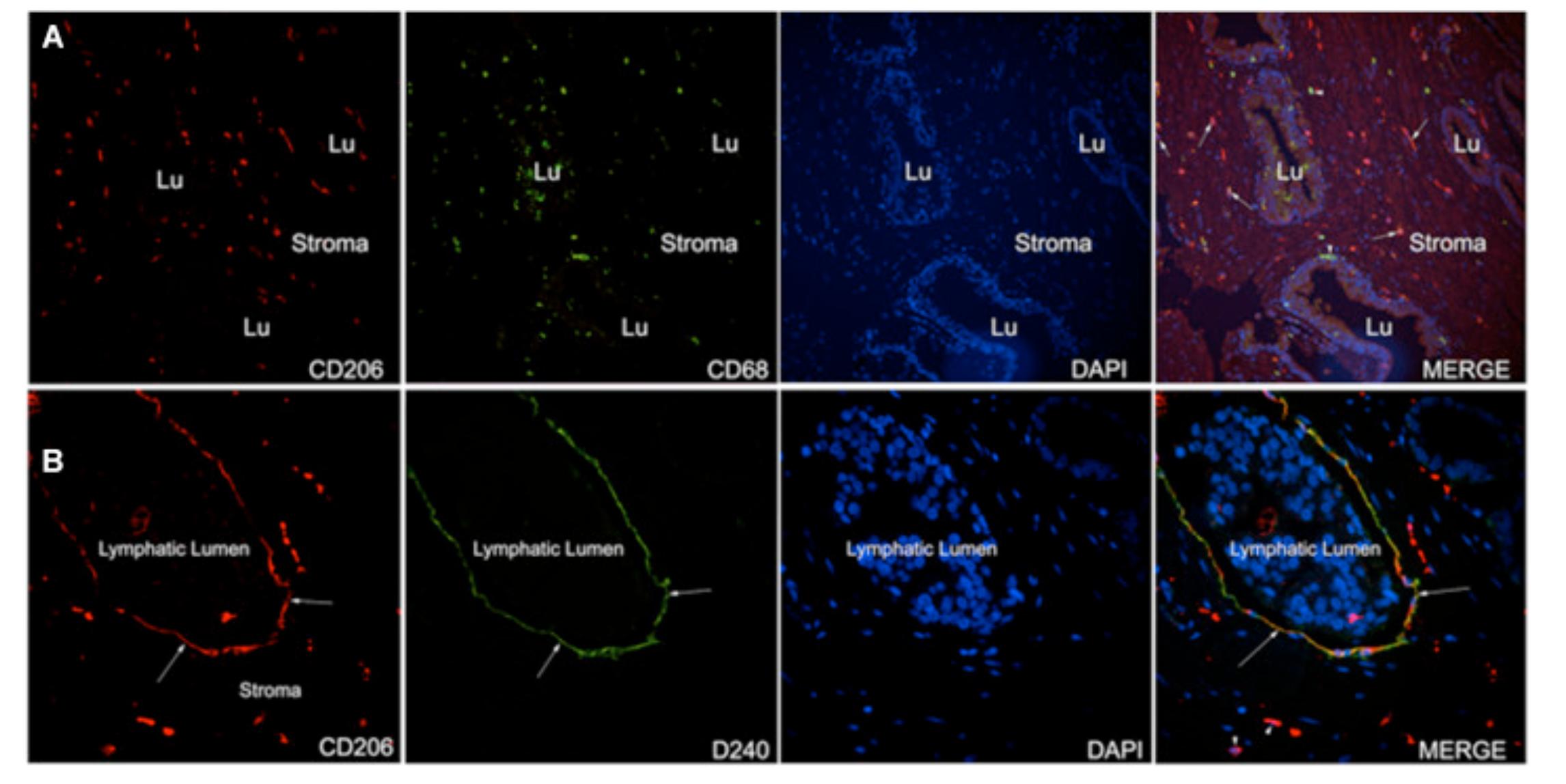
The Zarif laboratory has recently published a manuscript titled “Mannose Receptor-positive Macrophage infiltration correlates with prostate cancer onset and metastatic castration-resistant disease” in European Urology Oncology. We found that CD206 expression increased in human castration resistant disease relative to normal prostatic tissues.
This new research suggests that immune cells called M2 tumor-associated macrophages may increase as prostate cancer becomes more aggressive, potentially opening a new avenue for treatment.
Researchers analyzed 192 prostate tissue samples representing different stages of prostate cancer, from normal prostate tissue and localized tumors to lymph-node metastases and metastatic castration-resistant prostate cancer (mCRPC).
The study focused on M2 tumor-associated macrophages (M2-TAMs), immune cells that can suppress inflammation and influence the tumor environment. Using the marker CD206, researchers found that the proportion of CD206-positive macrophages increased progressively with disease severity.
The increase was observed across a clear progression: normal prostate tissue, primary prostate cancer, regional lymph-node metastases, and finally mCRPC. Additional laboratory studies using flow cytometry supported the presence of these M2 macrophages in prostate cancer tissue.
The findings are particularly important because M2 macrophages can create an immunosuppressive tumor environment, potentially making it more difficult for the immune system—and some immunotherapies—to effectively attack cancer cells.
The researchers suggest that targeting M2 macrophages could be a potential strategy for improving immunotherapy responses in prostate cancer, although further research will be needed to determine whether targeting these cells can actually improve patient outcomes.
The study had some limitations, including a relatively small number of rapid-autopsy samples and the absence of neuroendocrine prostate cancer samples.
Overall, the findings strengthen the evidence that the immune environment surrounding a prostate tumor changes as the disease progresses and highlight macrophages as a potential therapeutic target in advanced prostate cancer.
Recent Comments